SURPLUS MILITAIRE
Nous vous attendons nombreux et nombreuses sur les bourses suivante
Wavre tout les 1er samedi
3 Octobre 2026 - 7 Novembre 2026 - 5 Décembre 2026
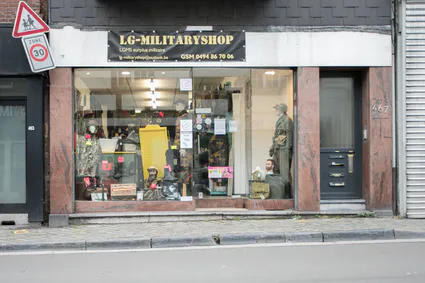
De 7h00 à 12h00 Avenue Solvay 5 Zoning nord Wavre
Ciney Militaria Dimanche 25 octobre 2026 Rue du marché couvert 3 - 5590 Ciney

Bonnet Seconde Guerre Mondiale, BLACK
 6.0 EUR
Bonnet Seconde Guerre Mondiale, Etoile blanche
DESCRIPTION:
Composition: 100% acrylique.
WWII Military Allied Vehicle Stars
A lot in terms of WWII allied stars, was done even by "free format" and / or lost by interpretation in field orders and memo’s top down,
from command to captain, sergeant, corporal to the soldier who had to paint a vehicle.
Except that where consisted “guidelines” introduced by the allied troops like the 1942 US Army - AR 850-5 and some harder to find Commonwealth manuals.
Before the 1943 Italian Sicily campaign “Operation Husky” and later ETO 1944 France, Normandy “Overlord” / D-Day.
It was common for allied vehicles overseas to carry a simple white star as an identifier.
But in the dust and confusion of battle, the allied or “US star” could occasionally be mistaken for a German Cross at ranges over 1000 yards.
In fact, tankers and armoured units began painting out the stars to avoid becoming a casualty of ‘friendly fire’, especially from allied air units.
The problem got so bad that in this period the term “American Luftwaffe” was coined.
(This was a genuine nickname given to the 9th USAAF by allied armoured troops back then.)
Experienced units like the 2nd Armoured started painting out their stars altogether.
The (friendly) aircraft recognition circles were completely around and uninterrupted,
as well “broken” with 4 and 5 gaps, if they were made from oil board paint mask stencils.
There are even WWII photo’s with 8 gap circles.
MARQUE: Fostex Garments